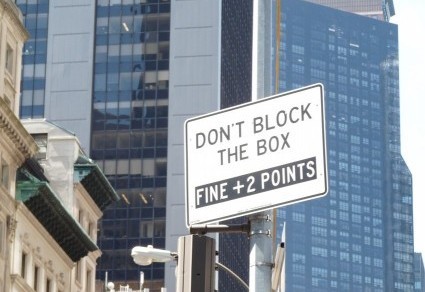
On the Bus

Readers of this blog know that my topic is usually language. But today I’m putting words to one side and focusing instead on actions. Specifically, what I witnessed on a Manhattan bus yesterday.

I was staring out a window, oblivious to my surroundings, when I slowly became aware of a little stir. The man on my left was rooting around in his grocery bag. He pulled out a roll of paper towels, peeled back the cellophane, tore off one sheet, and then another. He passed both towels to the woman next to him, who in turn passed them to someone sitting beside her, who leaned across the aisle and gave them to a mom who had used up a hefty supply of tissues on her child’s very drippy nose. The mom smiled her thanks and said, “This is the America I want to live in.” We bus riders chorused our agreement. Someone added, “That’s why I live in New York.”

I don’t think New Yorkers have a monopoly on kindness, but I do believe we seldom get enough credit for the amount of kindness this city calls forth from its residents every single day. Yes, we’re impatient. Yes, we can seem – and be! – rude. But for people from such varied backgrounds, whose experiences and beliefs may fall as far apart as Earth and Jupiter, we manage pretty well. And often, like today, New Yorkers step up in surprising ways. My busmates understood how annoying a trail of mucus can be, both to the dripper and the dripped on. Perhaps they also grasped that the dripper/drippee toggle can flip in the blink of an eye (or the ah-choo of a nose).

The world feels like a cruel, hard place right now. I’m hoping paper-towel man thrives and inspires others with his kindness. He certainly inspired me! I’m not planning to carry around a roll of towels, but I have resolved to pay more attention and to help whenever I can. If enough of us resolve to do so, perhaps we can collectively toggle from despair to hope.

Mysteries

No matter what else I’m reading, I always have at least one mystery novel on my nightstand. At the end of a long day of bad news — far too frequent, these days — I need to dip into an orderly world where justice prevails. Yes, I know some mysteries deviate from that pattern. I don’t read those. How do I know whether a mystery fits my criteria? I read the last page first. Real life is surprising enough! Plus, I nearly always forget the identity of the murderer by the time I get to the end of the second chapter.

When I’m out and about, I enjoy mysteries also. Sometimes they show up in an overheard comment: “He’ll do for a starter husband” (one twenty-something woman to another) and “Have you brought your business to a successful conclusion?” (dog walker to poodle). Before you ask, yes, these are real things New Yorkers said.

My favorite mysteries appear on signs. Here’s one:

No one can read this without wondering which ingredients the store won’t sell. Unethically sourced shea butter? Uranium? Magic beans? It’s a mystery.

Here’s another mysterious sign:

Let’s get practical: How does the site owner know what parents have said to their kids? Does telling children of the dangers of trespassing fulfill the parents’ obligation? (“I told you, now go and trespass if you want.”) Also, isn’t trespassing anywhere a dangerous activity? Or only on this site?

Another mystery:

I’m ignoring the subject-verb agreement error (Shower Caps should Keep, not Keeps). What I really want to know is whether there are Shower Caps that make hair wet. Also, is there a shower cap that keeps something other than HAIR DRY? Maybe there are Shower Caps for toes? Or belly buttons? Elbows, perhaps?

The mysteries presented here don’t conclude with justice triumphant, but neither do they honor the guilty. They’re just mysteries that add a little fun to my life and, I hope, to yours also.

Private Lives

In this age of social media, you might think that nothing is private. Think again:

I do my own laundry, but if I sent it to a LAUNDRY, I’d select this store. My clothing is on the shy side and prefers not to whirl around with others’ duds.

Here’s an odd take on privacy:

I’d love to see a definition of personal hygiene practices. If they’re prohibited, must you forgo handwashing after using these Restrooms? Also, why practices? Is personal hygiene one of those skills you have to spend 10,000 hours on to perfect? I snapped this photo in 2017, so perhaps the word practices is out of date. We all learned how to wash our hands during the pandemic, didn’t we?

This Private Property requires good posture:

Somehow I thought the decision to lean or not to lean was a private matter.

On a more personal (but not private) note, I wish you and your family a happy, healthy 2026.

This Holiday Season

Who doesn’t love the holidays? Lots of people, actually. If you’re stressed out, I have some suggestions. First of all, ignore signs like this:

If it’s NEW it can’t be a TRADITION, not if you accept the dictionary definition (“a long established custom passed from generation to generation”). Besides, you’re probably too busy to add anything NEW to your to-do list.

If you’re absolutely determined to try something NEW, here’s a possibility:

DROP-OFF your CHILD and let peace and quiet descend. Brilliant! And if the kid comes back in less-than-perfect condition, you can always go here:

After you pick up your clean, neatly folded offspring, stash them in a drawer and head to the mall. But avoid this store:

Why would you buy something at a store promising to lower the price after you’ve plunked over some cash? Be wary of this shop, too:

The 99 CENT part sounds good, but what about the PLUS? Thousand-dollar T-SHIRTS, million-dollar UNDERWEAR . . . the sky’s the limit.

That’s all the advice I have today, except for this: Find a way to enjoy whatever holidays you celebrate, and find a way to help someone who needs it. I wish you all the joy of this holiday season!

The Language of Medicine

Right around this time last week, a surgeon inserted a tiny camera and an equally tiny tool into the most poorly designed human joint. I refer, of course, to the knee. Seriously, Evolution, were you napping by the time you got to the middle of the leg? I was fortunate to have excellent medical care, and even more fortunate to have medical insurance. I am aware that many others are not so lucky. And before I move on to the language of medicine, I will climb — carefully, because, you know, the knee — onto my soapbox. Health care is a right, not a privilege, and our society should treat it as such.

During the past week I’ve thought a lot about the language of medicine. Not the scientific, but the ordinary terms. For example, what did I have? A procedure? To me that sounds euphemistic, like real estate agents’ calling an apartment “charming” (last renovated when Eisenhower was president) or “cozy” (comfortably accommodates two people, standing up). To me surgery is more serious, something that happens to a vital organ. Perhaps the middle ground is operation, a term useful for military invasions and public relations blitzes.

My procedure/surgery/operation took place in a facility, not in a hospital (a serious, stay-over place) or an office (less serious, with magazines in the waiting room) or a clinic (middling serious). The root of facility is facilus, Latin for “the means or unimpeded opportunity for doing something.” I’m not sure about the unimpeded part (see note above on insurance), but the facility I went to certainly did something. A good something! My knee feels better.

The last term is patient, from the Latin patior, “to suffer or endure.” I got off lightly, in this instance, with not much beyond soreness. I didn’t even have to be patient, because everyone involved in my procedure/surgery/operation kept to the schedule. I’m sure my future holds more medical (INSERT PREFERRED TERM HERE), because I’m senior/older/in my golden years/not dead yet. I can only hope everything proceeds smoothly, and that the insurance company approves.

Moody Blues

The national mood, and, I must admit, my own mood, is so down that an elevator to the sub-basement wouldn’t reach it. What to do in response? Well, you can have a serving of this:

(Photo courtesy of my friend Catherine, who prefers grape jelly and proper spelling)

Judging from the muttering and sometimes shouting of Gripe(s) I hear, this is a popular option. However justified your Gripe, though, venting your feelings is a short-term fix at best.

An alternative:

(Photo courtesy of my friend Deborah)

In my experience, inflicting the SILENT TREATMENT on others seldom yields positive results. The target may experience the silence as agreement or worse, welcome it as a peaceful interlude.

What else can you try? Here’s a tempting option:

The problem with BREAKING, REMOTE or otherwise, is that at some point you have to put the pieces back together.

One more:

I posted this photo of a New York Times headline eight years ago, commenting on the repetitive nature of the expression Failing to Succeed. (What’s the alternative — Failing to Fail? Succeeding to Success?) But now I’m focusing on Giving Compromise a Try. Not on matters of principle, of course. But maybe finding common ground around the edges of less important disagreements can lead us, and our national mood, out of the sub-basement. Perhaps as high as the basement? Surely that’s not too much to ask?

Em and Ens

$1.5 billion. Sounds like a lot of money, doesn’t it? That’s the settlement of a class-action suit filed against Anthropic, a company that downloaded pirated copies of books, including fifteen of mine, to train its artificial intelligence software. When I heard $1.5 billion I hyperventilated for a few minutes. Then I read the fine print. Attorneys get paid first, and publishers will have a share. My portion, converted into coins, is likely to fit inside a medium-sized piggy bank. Still, I’m pleased that a blow has been struck against dishonesty.

Many more suits have been filed against AI companies, but I doubt any will include their effect on the em dash, the longest of the three punctuation marks formed with a horizontal line. Written material containing an em dash is now assumed to be AI-generated. In a weird way, that assumption makes sense. AI was “trained” by professional writers’ work. We use em dashes. Hence, so does AI. But as a professional, em-dash-using writer, I’m caught in a loop: my work looks like my work and therefore resembles AI-generated work designed to mimic my work. Kafka, meet Chat GPT.

Now for the en dash, a slightly shorter line that signifies a strong connection. Sometimes the connection is geographical, describing, say, a train route between Boston and New York. Sometimes it’s personal, referring perhaps to the coordination between pitcher and catcher. Most often, the en dash functions chronologically:

That’s what it’s doing on the stone-paneled wall of a churchyard in my neighborhood. Each slab is incised with a name and a set of dates. A life span! The en dash expresses the strong — in fact, absolute — connection between birth and death. A couple of panels, belonging to the ultra-prepared, show only one date and the en dash, waiting to be completed by an unknown, though certain expiration date. If the em dash has come to signify inhumanity (for what else is artificial intelligence?), the en dash expresses the ultimate truth about humanity. Everyone born will die.

Before the en dash comes for you, I recommend you make the most of every moment — for yourself, and for a world that needs all the help it can get.

Speaking of the world, I have an update to share. Take a look at this photo, which I snapped outside the United Nations in 2015:

For a decade, drivers had to decide which sign to obey — STOP or NO STOPPING. But now all the signage has replaced. NO STOPPING is what drivers are supposed to do. Which means that if the traffic light next to the NO STOPPING sign is red, you should blow right through the intersection. Well, nobody’s perfect.

The Proofreader’s Lament

Proofreaders make comments to writers, who are supposed to amend their text accordingly. That’s a good system — when it’s actually put into practice. Not so in these signs.

First is a sign my student Allison sent me. There’s a ton of words, but if you persevere, the last line makes the time you spent reading more than worth the effort:

If it’s still too long let me know must have been meant for the person in charge of placing labels on food, who, based on this sign, either had way too much to do or cared way too little about the finished product.

Next is a sign — one of a dozen or so — posted on West 72nd and Broadway when Pope Francis visited New York City in 2015:

Once again, it’s worth plowing through these nearly unintelligible instructions for trash pickup to arrive at the last line: he said the 4 — 12 shift. If he was Pope Francis, I commend him (posthumously) for his attention to detail.

I found this one while searching for a place to stay during a recent trip. I won’t reveal the name of the perpetrator, but I will say that it’s a major hotel chain:

The fun part of this caption appears in the center of the second line. The text indeed needs a comma, and the hotel needs to pay more attention to its advertising.

Whatever form your labors take, I wish you a Happy change to lower case Labor Day weekend.

If you know, you know . . .

A former student of mine recently put out a call for catchphrases unique to a family. If you’re in the family, you know the meaning. If you’re not in the family, you don’t have the faintest idea what’s going on. These signs fall into the “if you know, you know” category. They make perfect sense to somebody, somewhere, but they puzzle to the rest of us. Here’s one:

What does RADIANT TUBING do? And what is it radiating — joy, sunlight, cosmic rays? Why must we BEWARE? And does BEWARE mean “don’t come within three miles of this sidewalk” or “take your piledriver somewhere else”? Theories, or better yet, actual information, welcome.

Another enigmatic ad:

I live in the sort of neighborhood where doing one’s own chores is not a given. Even so, I’m surprised that someone would hire someone else for BREAKING a REMOTE CONTROL device. In my experience, all you have to do is throw the thing at a wall. The wall generally cracks, though. Maybe that’s a reason to hire a pro?

It’s well known that some of us are not technologically literate enough to figure out an app. So it would not shock me to see a service offering help with, say, downloading, installing, and using an app. But the service offered by this sign goes a step too far:

I don’t need someone to PICK-APP for me. I can select an app all by myself!

Last one:

No, this doesn’t refer to a haircare product. It concerns parchment paper. Does anyone actually measure and cut the paper and then reinsert it for Decurling? This definitely falls into the life’s-too-short category for me. I use my hands.

Wishing you well in these dog days of summer! If your family has a catchphrase, feel free to share it.

In Memoriam

I vividly remember the night in December 1980 when John Lennon was shot and killed. Contemporary news accounts reported that Yoko Ono, his wife, wasn’t injured in the attack. That’s wrong, I remember thinking. The same bullet that took Lennon’s life also took the life Ono had with her husband. It took the life Lennon’s children had with their father. Homicide isn’t a dot. It’s a circle.

I’m writing about this topic today, instead of making my usual snarky remarks about grammar, because a few days ago a former student of mine was gunned down in the lobby of an office building on Park Avenue. Only 43, Wesley Mittman LePatner was a bright light in high school and a bright light in adulthood – a loving mother and wife, a wise mentor, a responsible and generous citizen. The gunman killed Wesley and three other innocent people because somewhere in his sick mind their destruction made sense and because our society failed to keep a powerful weapon out of his hands.

I think a lot about language, as readers of this blog know, so I paid close attention to the words used to report this crime. Alerts on my phone reported “police activity,” then “active shooter,” and then “containment.” Bloodless words for a bloody deed. To be sure, the authorities are rightly concerned with preventing panic. It’s not appropriate for them to scream with the emotion they undoubtedly feel.

But the rest of us should scream, for as loud and as long as it takes, until the insane level of gun violence and our collective tolerance for it falls as definitively and finally as Wesley did. May her memory be a blessing, and may it be a motivation.